When the CEO of the state's largest company says out loud that power is the constraint on growth, that is worth paying attention to, and not only for the reason it usually gets quoted.
At the 2025 BioCrossroads Life Sciences Summit, Eli Lilly and Company CEO David Ricks pointed to Indiana's power supply as a limit on what the state can attract and build. Lilly is constructing what it describes as the world's largest chemistry-focused supercomputer in Indianapolis, running more than 1,000 advanced Nvidia GPUs.
“We're only constrained by power, by the way. If we want to grow our industrial base, that's what's required.”
David Ricks, CEO, Eli Lilly and Company
The part that gets lost
The conversation that follows a statement like that is nearly always about generation. Not enough megawatts, so build more.
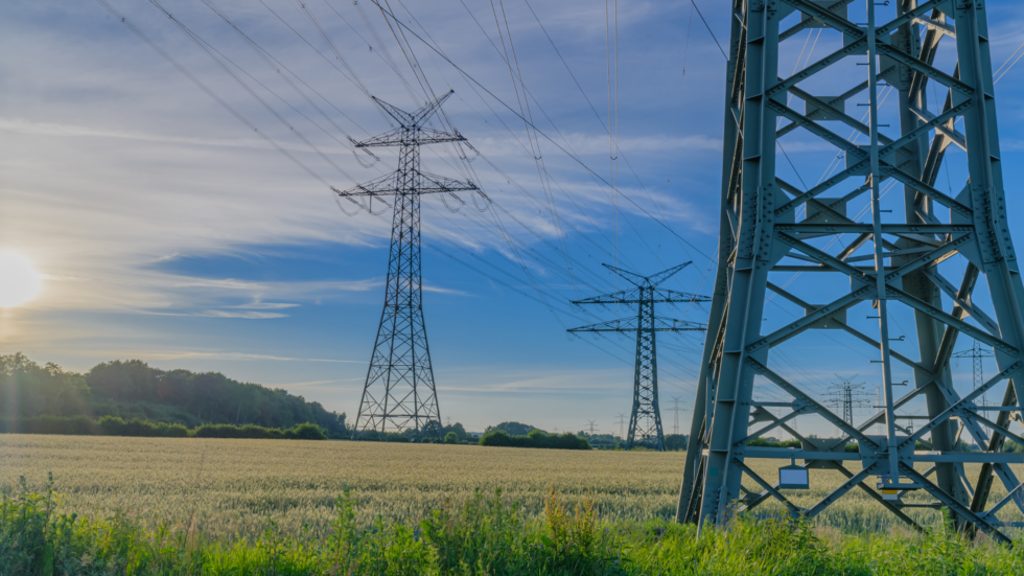
Generation is genuinely part of it. In our experience, though, what stops a project is rarely a shortage of energy in the state. It is that the energy can't reach that particular site on the timeline the customer needs, because the substation serving it is full, the feeder can't carry it, or the transmission study came back with an upgrade nobody had budgeted for.
A load that shows up wanting tens of megawatts at a site engineered for a fraction of that is a distribution and transmission problem long before it is a generation problem.
What this means if you run a system
The utilities and municipals that win this work will be the ones who can answer quickly when a developer calls. Where do I have capacity, how much, and what would it take to serve more. That is a question about your own system, and most systems cannot answer it inside several weeks because nobody has modeled it recently.
A current load flow, a current fault study and a construction work plan tied to real growth are what put you on a shortlist instead of hearing that the timeline doesn't work.
What it means if you are the load
Start the interconnection conversation earlier than feels necessary, and have an engineer look at the site's actual capacity before it goes under contract. Finding out late costs you eighteen months, which is a great deal more than the study would have.